
This article appears on the Ehlers Danlos Support UK Facebook page during EDS Awareness month. It offers great tips for managing the dislocations that are a part of every day life for us zebras.
“‘I’M JUST POPPING OUT FOR A WHILE!’
Article by Jason Parry, Highly Specialist Physiotherapist

One of the most common questions I get asked is how to manage dislocations and subluxations, which is quite strange if I happen to be popping to the shops for some milk at the time. However, in all seriousness, this really is one of the most frequent questions I face in clinic when treating many of my hypermobile patients and let’s face it, it really is no laughing matter.
So where do I begin? Well, a good place is to firstly understand the difference between a dislocation and a subluxation.
A dislocation is defined as “displacement of a bone from its natural position in the joint”. This is where the two bones that form a joint fully separate from each other. If we consider a shoulder, for example, which is a ball and socket joint, a dislocation occurs when the ball (which forms the top of the arm bone) slips entirely out of the socket it should sit in within the shoulder. This can happen in any direction, but the main point is that the two bones completely separate. Ouch!
A subluxation is basically defined as “a partial dislocation”. It can be no less painful than a full dislocation, but the two bones that form the joint are still partially in contact with each other. So once again, if we consider the shoulder joint as an example, the ball which completely came out of the socket in the dislocation example above would still be partially sitting in the socket in a subluxation.
These events can happen in almost any joint, but some are more commonly involved than others, with shoulders, knees, thumbs and ankles seemingly some of the most prevalent.
Both dislocations and subluxations can be painful, irritating, infuriating and occasionally debilitating problems. However, they don’t need to ruin your life and can, with patience, effort, trust and time, be managed. Not necessarily completely eliminated, but managed.
Let’s first look at the reasons why dislocation or subluxation happens with a quick anatomy lesson. The main reason is abnormal collagen composition. Collagen – primarily Type 1 collagen – is the main structural protein of the various connective tissues in the body. It is found in ligaments, tendons and joint capsules, and makes ligaments and tendons strong like little ‘guy ropes’. What do ligaments and tendons and joint capsules do? Ligaments connect bone to bone, tendons connect muscles to bone, and joint capsules are like envelopes of tissue that surround a moveable (synovial) joint. So we can see that these ligaments, tendons and joint capsules play an important role in giving a moveable joint its stability.
Let us now consider hEDS (hypermobile type EDS). This is a Heritable Disorder of Connective Tissue (HDCT) caused by a defect in the structure, production or processing of collagen, which makes the collagen in ligaments and tendons stretchier (more lax). This means that joints are potentially less stable – hence greater propensity for subluxations and dislocations.
There are other reasons for dislocations and subluxations:
• Altered muscle tone: This can often account for dislocations. Inappropriate muscle patterning, in which certain muscles around a joint ‘switch on’ when they shouldn’t and then inappropriately work way too hard, can often ‘pull’ a joint out of place. The joint then also becomes easier to slip out, of course, if it is more lax in the first place. Muscle fatigue, spasms and stress can all play a part in this too.
• Impaired proprioception: Proprioception is the body’s ability to sense position and movement within joints and enables us to know where our limbs are ‘in space’ without us looking. It relates to coordination. Impaired joint position sense can cause joints to slip out of place.
• Repeated overstretching: Otherwise known as too many ‘party tricks’. I know many of you guys have the capacity to ‘amaze’ people with your ability to wrap yourselves into weird and wonderful positions that the rest of us gawp at. You know, those tricks you did as kids, popping your shoulders in and out of joint, or folding your legs over your head? Well, stop – it’s no good for you! Repeated overstretching to that degree will only exacerbate the laxity and the chances of the joints slipping out of place. I’m certainly not saying that you should never do stretches, but I am saying give up the party tricks and don’t stretch your joints way beyond ‘normal’ range. Just because the joint ‘goes there’ doesn’t mean you should take it there. So please forget about that career as a contortionist with Cirque du Soleil.
• The shape of your joint surfaces: Some of you may be born with shallow-shaped joint sockets or other bony shaped ‘anomalies’ that predispose a joint to possibly slipping out of position more easily. Unfortunately, that just may happen to be the shape of your skeleton.
• Traumatic incident: One of the most common reasons for a joint to come out of place for those of us without EDS. Traumatic incidents can happen to anyone, but your extra joint laxity may actually work a little in your favour with this one; it may prevent you damaging some of your ligaments/tissues in the way that a non-hypermobile person who suffered a traumatic dislocation probably would.
How often can these subluxations/dislocations happen, I hear you ask? The answer to that is different for different people. Some people get them maybe just once or twice a year, others once a month. Some people get them once a week and others once a day. Some people get them repeatedly throughout the day and in some people they never seem to stop. Either way, we need to try to reduce the frequency if we can, and manage them when they do happen.
In some people, the joint just finds its own way back in to place, and phew, what a relief. But in others, once the joint slips out, it won’t go back in again. The pain kicks in (often big time) and the most common and perfectly understandable reaction is… PANIC! At this point, some people pick up the phone and call for an ambulance – well actually they don’t; they’re often writhing in agony or they can’t actually pick up the phone especially if its their shoulder or wrist out of place, but someone else does – and off to A&E they go.
BUT WHOA THERE! STOP FOR A SECOND, DON’T PANIC, BREATHE NORMALLY AND STAY CALM!!
Panic causes more stress and more muscle spasms. Stress and muscle spasms cause more pain, and then there is less chance of resolving the dislocation. Easy for me to say, I know, sitting here with my joints all lovely and located without the associated agony. But trust me, if you want to start managing this situation and taking control, then this is what you’re going to have to begin to practise. Because what happens at A&E? Well, if they aren’t already fed up with you turning up 100 times a month and starting to get all ratty towards you – not fair I know – they will often give you pain relief of some sort (perhaps Entonox) or they may go the whole hog and give you a general anaesthetic. Then they’ll yank your joint back into place. All good, right? Not so, because often, maybe within minutes, the joint will pull itself back out of place again because of the muscles still spasming around the joint, and you’re back to where you started.
So what else do our A&E docs then sometimes do? They stick you in a plaster cast to ‘hold’ the joint in place. Imagine, then, the battle going on underneath it – your joint trying to pull itself back out of position again while being forcibly held in place by the cast. Sounds painful to me, and often is – and when then do you take the cast off? This doesn’t sound like a viable management solution to me or a good way of life for you.
So what should you do if your joint comes out? Here are the 6 key principles that I suggest you need to start incorporating in order to begin to get a grip of managing this situation as opposed to this situation managing you. The main aims are to stay calm, keep on top of the pain and allow the muscles to relax. It takes lots of practise and patience, but it can be done.
1. Breathe : Use slow deep, relaxed breaths. Try using some relaxation techniques, there are lots of different ones out there. As painful as it is, and as difficult as it may sound, you need to start to try to take control of this situation. So start to learn how to breathe through it.
2. Use Painkillers: Oh yes! I’m not a monster you know; I know how painful this situation can be. I’m not for a minute suggesting that you should just sit there and ‘suck it up!’ For goodness sake, take some appropriate painkillers (analgesia) if you have some. However, note the word ‘appropriate’. You should only ever take analgesia according to the dosage indicated by your prescriber. Never take more than the suggested dose. You might feel like it may not be enough at the time, but if it can take some of the edge off, then that’s a great start. Please don’t ever overdose.
What about Entonox (commonly known as gas and air) as pain relief? I am aware that some people have access to Entonox at home, or use it at A&E. There can be a role for it, but this must be used with caution. Prolonged use can lead to vitamin B12 deficiency and can interfere with DNA synthesis, not to mention cultivating a dependency, which are all big issues.
3. Support the joint: You need to try to make yourself as comfortable as possible (I know it’s not easy). Use pillows or a sling of you have one. Find a comfortable resting position as much as possible. This allows the muscles to relax and stop spasming.
4. Try heat: Hot water bottles, wheat bags and a warm bath can all help to relax spasming, overactive muscles.
5. Distraction: Try to take your focus away from the pain and the situation. Listen to music, watch a film if you can, talk to friends/family, try a relaxation CD/MP3. This can be helpful as a short-term pain relieving strategy. Again, it can help muscles relax.
6. Gentle massage: Sometimes gentle massage around the joint can help relax the muscles enough to be able to gently re-locate the joint or for the joint to just slip back into place by itself.
What if it doesn’t go back, I hear you scream (and I do hear you scream)?!
Don’t expect the joint to go straight back in. It is often not unusual for joints to remain out of place for hours or even days. But once it’s out, it’s out. It’s not going out even more, so try not to panic.
Isn’t it dangerous though? What about damage? Am I damaging my joint if it comes out?
It is highly unlikely. Your joint laxity allows for your ligaments and capsules to stretch. It is mostly just distressing as opposed to damaging.
When should you go to hospital or get help?
• if the limb starts to change colour due to a lack of blood supply
• if your limb goes completely numb
• if you have tried strategies 1-6 above, have waited a reasonable amount of time, and are still desperately struggling.
But as mentioned earlier, it is not unusual for A&E to relocate your joint only for it to pop straight out again or when the anaesthetic wears off. Therefore you need to learn to stay calm and to start to self-manage.
Learn Lessons!
One of the most valuable things you can do after a subluxation/dislocation is to reflect on the event once you have had a chance to calm down. Were you moving in a way that normally causes the joint to dislocate? Did you move without thinking? What was your posture like? Were you tired or overdoing it? Were you stressed about something? It is so valuable to look for triggers as to why the event may have happened. It may have been none of these reasons, but if it was, then you can hopefully learn to avoid repeating them in the future.
Finally, prevention is better than cure! It is obviously better if we can prevent these situations occurring in the first place as opposed to having to deal with them. To that end, the following can hopefully help to reduce the frequency of such occurrences:
• physiotherapy to learn to control the muscles around joints and to use the right ones
• rehab to improve proprioception
• the possible use of supports/braces if required
• trying to manage stress and anxieties.
But ultimately, stay calm! The more you stay calm when these events happen and manage it yourself, the easier it should get each time.”





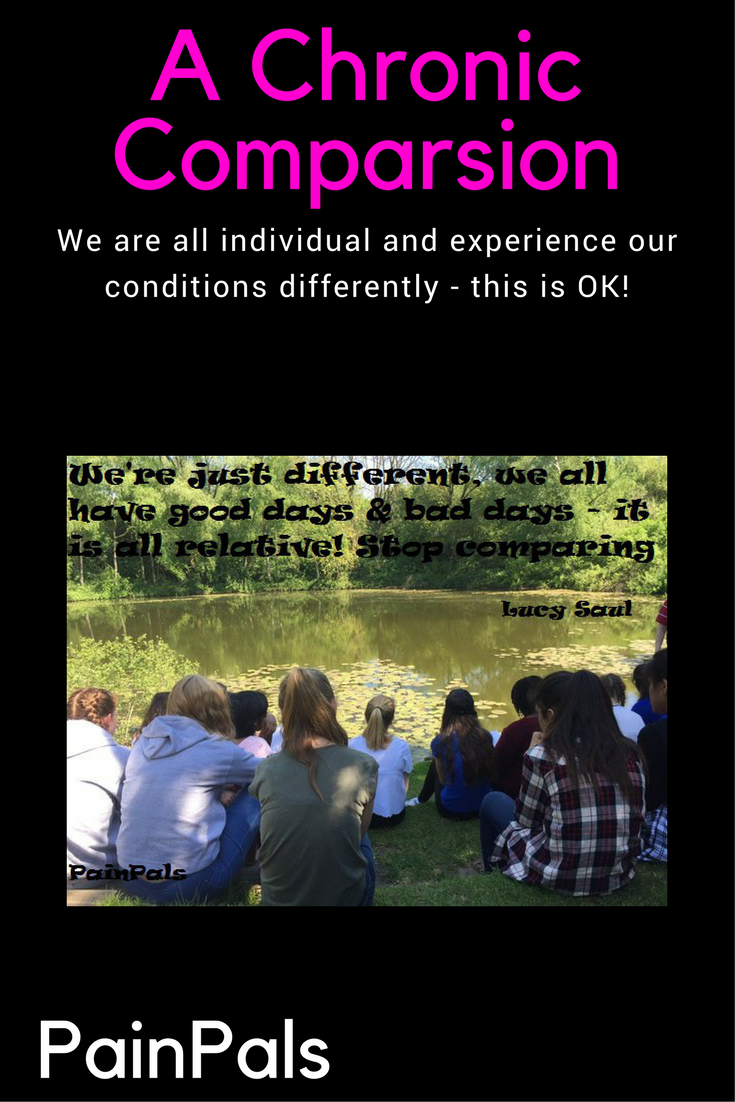


 The programme was great for highlighting EDS and this amazing young lady – I watched it twice and cried each time. Of course I turned to my lovely teen girl and said “I feel guilty for making a fuss!” and whilst her brothers would probably have agreed with me, my lovely girl (now suffering her own dislocations, hand pain, anxiety, etc) told me off for thinking that way telling me “It is all relative”. Out of the mouths of babes….






 A visit to the dentist got me thinking again about what our medication does to us. I am pleased to report that the dentist was very impressed when I opened my mouth – no not to speak , he made sure that didn’t happen – but to see a set of filling free gnashers! Quite a feat at my grand old age as my kids remind me. Forget the dodgy back, bendy limbs, loose joints, malfunctioning bladder and pain, because my teeth are still ok!
 In the heady days of my early career as a London staff nurse, when we both worked hard and played hard, I was introduced to red wine. I’d never really liked it before, but our medic friends Steve and Tina introduced us to a certain wine bar in Leicester Square – and Steve introduced Duncan to a single malt whisky club, least said about that the better!! The Cork & Bottle was a basement bistro style wine bar and was the only place in the early ’90s where a particular Aussie red wine was to be found. More than once the four of us drank them dry of our favourite and had to be thrown out when we outstayed our welcome. I have no idea if it is still there, but it holds some great memories.
 But at times when it feels like there are few pleasures left, a tipple is called for – except for when it starts to taste DISGUSTING! My favourite red wine tasted foul – bitter and sediment like really cheap, student wine. What on earth was going on?? Did I ever remember to tell my patients that favourite food and drink might become unpalatable? In my head and neck days it went without saying, but I’m not sure that I really understood just how much my mouth, and my eyes for that matter, would change due to drugs. A drier, sore mouth with taste buds that could no longer taste – sweet food became a no, no and savoury food never had enough flavour.


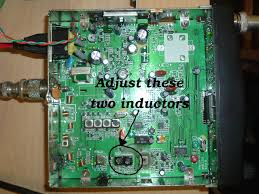 On describing the stimulation and that it wasn’t quite covering all the pain regions now the levels are higher (inner thigh, undercarriage etc), my implant programme was changed to expand the band width of each electric pulse. Imagine the pulse as a ball…..the diameter of the ball coverage has been increased, whilst the intensity remains the same. It has really made a difference and not only am I feeling the stimulation more widely, but I am using a lower setting. Win, win. Back to the INPUT session ….
 Dee and Ben, you are both of course let off……one in Guys having the permanent implant and the other snowed in up in Shrewsbury. It was fantastic to see the other ladies, both whom I’ve kept in touch with, but we all would have loved to know how the others (the men!) have got on. We did meet some of the participants in week 3 of a 4 week course which was interesting. A couple of them had already had stimulators which had failed – one lady had received 2, both failed. Jean and I both felt guilty sitting there with medtronics buzzing away pretty successfully! Zena from our group decided not to go ahead with the trial for the moment and has had successful pain relief from epidurals at the Royal National at Queen Square. I have experienced some stim envy over the last fortnight as Dee has had a high frequency stimulator fitted, which means that whilst she doesn’t feel an electric pulse, she can have the device on ALL THE TIME…….this means ALL NIGHT. I’m so jealous!!

 PainPalsBlog