Great Exercises for People Who Have Chronic Pain – Counting my Spoons


For those of us in the UK: it is estimated that 14 million people are living with chronic pain, of these 25% were prevented from taking part in normal daily activities on at least 14 days in the previous 3 months. (Chronic Pain Policy Coalition, British Pain Society)

Stim Update!

I started this blog initially to keep a record of my trials and tribulations as I had my spinal cord stimulator implanted, but it has evolved into well, ramblings maybe!  Anyway having been reading posts on the support group site, I thought it was time I wrote a 7 month update!

I still feel that I’m learning to live life with my stim.  What I’m about to write will probably be repetitive of other posts on this site, but a recap never hurts.  Living with pain day in, day out is really hard work – exhausting both physically and mentally.  I would love to be able to tell you that having a scs has made everything better, that the pain is gone and that life is back to “normal”.  But I would be lying.  Sorry to make things sound bleak for anyone waiting for a trial, but it is important to be realistic.  Those of us under St Thomas’ know that they pull no punches on their 2 week pre trial course in order to prepare us, but everyone’s pain and experience differs so that it is impossible to predict every eventuality.

For me there have definitely been enough positives that I would do it again.  The stimulation that I feel in my leg, foot & back does ease the pain the majority of the time.  It gives me a feeling of control back.  But a downside of this particular scs (Medtronic) is that in order to continue the pain relief, it must not be left switched on all the time.  St Thomas’ recommend several hours on, several off – but I am finding the periods of time when switched off very difficult to cope with, particularly at night.  I understand the rationale for turning the device off: if the tingling sensation becomes the body’s new baseline, then there is little room for manoeuvre with further pain relief.  But this doesn’t help me when I’m climbing the walls!!  Any advice from out there would be gratefully received….download (5)

I seem to come back to negatives, but I really don’t intend to.  I guess the nature of chronic illness, particularly pain, is that it is always a doubled edged sword.Double-Edged-Sword-of-Social-Media-300x228  As you already know, another major achievement has been weaning myself off oxycontin and it hasn’t been easy.  I feel proud of myself for being bloody minded enough to stick with the withdrawal and I can report that some of the opiate brain fog has lifted.  My memory is better – my kids might dispute this – and I have taken to social media as I feel more able to read blogs and facebook, twitter reports etc – again I’m not sure that the kids see this as a positive.  For me this is a sign that my concentration is improved and that there is a glimmer of the old me still lurking.   But..again a negative,  the pain has increased – I won’t dwell on this although I can relieve it by lying on my back and turning the stimulation up! Not particularly conducive to shopping.

My own post operative recovery was relatively smooth, but one of my pain group did not have such an easy time.  We are all warned about possible complications, but I’m not sure that we really think we may be in that odd couple of percent.  The post op complication suffered by my pain pal was an infection in the electrode lead site, which of course led to him being very ill.  Again I don’t want to frighten anyone, but it is important to be prepared.  The hospitals take swabs and St Ts’ are very clear that if said swabs come back growing any organism that the whole implant must be removed as the spinal cord gives a direct route to the brain .  In this case all’s well that ends well as he had another implant placed a couple of months ago…….however this did make another decide not to go ahead with the implant trial as he didn’t want to risk the same complications.

Headaches seem to be a common side effect of the stimulator – for some people more than others.  I have had them on and off, but another friend did experience them regularly in the first months post implant.  Charging the battery has not presented me with any major problems, although I have found that I need to remain sitting as the connection is too intermittent if I move about.  But I do find that the actual implant is quite painful at times and I have seen comments on the support group from others saying the same.  I am finally losing some of the huge amount of weight that I’d gained and this leaves the implant far more prominent under the skin.  I won’t even attempt to write the language that escaped as I caught the implant, but suffice to say that the air was blue!!!

So, 7 months on…..the young engineer turned 20 and passed his driving test (not sure which is more frightening); the A level student turned 17 and visited Parliament with us and attended a Euro debate with Chris Grayling arguing for Brexit – our son’s voice and own opinions are getting louder by the day and Politics may be on the agenda for uni; the lovely girl remains as untidy as ever, as politically correct (we get told off if we tease her brother for not being stereotypically gay enough – you know, tidy, love his mum) and showing great artistic flair. Whilst the kids probably don’t notice whether the stim has made much difference to my pain or not, Duncan would tell you that 7 months on he can see a big difference, even if I can’t always distinguish the good days from the bad.  It hasn’t made a difference to my worsening Ehlers Danlos (another blog post!) So no, it hasn’t been a miraculous cure, made me better or all the comments that people say/ask the chronically sick – but yes, I would do it all again in a heartbeat to just be able to experience some relief.

2016-04-29 19.05.58                                                      Student engineer’s first lesson2016-04-29 19.04.45

A level student drawn by his sister!                                                     

Another Pain & farewell to brain fog

#chronic pain #chronic illness

Easter saw a different pain in our household, with hubbie experiencing the nearest to childbirth that a man can.  Initially he blamed back pain on a football club that he runs for 6 and 7 year olds, but as the intensity rapidly increased over a 2 hour period we both knew that something more was going on.  So I packed him off with my dad as chauffeur and the 17 year old as escort to A&E, with a strong hunch what was causing the problem.  Son was given strict instructions to keep in touch, ask questions and let me know what the doctors said.  Do you think he did?  Eventually I received a text with one word……MORPHINE!  What does that mean, Olly??

My hunch was correct and blood tests came back showing renal colic, or kidney stones in layman speak.  Allegedly the most acute pain and akin only to labour.  When I finally did speak to my dear son, he informed me that by the time his father arrived at casualty he was in agony and the initial drugs didn’t even dent it.  Oliver expressed his concern by reading his book!  The symptoms were classic(extreme pain at the edge of the lower ribs radiating to the side), except that there had been no grumbling warning signs, and subsided as the stone dropped into the bladder.  A scan the following morning showed clear kidneys, no abnormal blood tests and no predisposing factors – just one of those things!

My news is that I’m a week off the opiates.  HURRAY!  I’d be lying if I said that the last few weeks have been easy – in fact these lower doses have been harder to adjust to than the huge doses of last year.  Restlessness, stomach pains, upset stomach, increased pain, insomnia….need I go on?  The sleepless nights are unwelcome and painful, yet already my memory is returning and my desire to read and write.  The funny thing is with certain drugs that the brain slowly but surely turns to a cotton wool fog, but at first the benefits seem to outweigh the side effects.  But then the opioid shaped holes in the memory, the concentration and the well being start to turn the brain into a Swiss cheese.  I can only imagine that this must be a little what the onset of dementia feels like. My inability to think, to remember, to concentrate has stopped me from functioning normally and in certain school governance meetings I have felt just out of my depth.  This, combined with faints that may or may not be a type of seizure – hurray! – has left me unable to function as I want to.download

My GP was surprised when I told her my news this morning.  She is hopeful that I may also see some better bladder function return, but my poor guts don’t know if they are coming or going.  It will probably be a good 6 months before I am entirely free of oxycodone, so I have no plans to touch the pregabalin as yet.  But I do feel pretty proud to say that I’ve gone from 120mg twice a day to zero in 6 months…….I went to a book club last night and I’m even using Twitter.  Good riddance brain fog!images (1)

Reflections and resolutions

The end of the year always feels like a time for reflection, doesn’t it? Or is it just a time for looking ahead and making those dreaded New Year resolutions, only to broken by Jan 5th!?  I really, really want to be looking forward for my own sanity and for those around me – but not before I reflect on this year.  Please indulge me……

It has been a tricky year in our house for a variety of health issues and the related monetary concerns that being unable to work brings.  It is almost exactly a year since Duncan was given the correct meds for his depression and was able to start on the long road to recovery.  At first, when he was so ill and unable to think straight, he was adamant he wouldn’t take drugs.  During my time nursing I cared for many patients and relatives who resisted antidepressants and we had the “if you had a headache you’d take a paracetamol; you have a chemical imbalance that just needs a little extra help to be put back to normal” chat.  At least when it was my own husband, not only had I this medical experience, but I had also been there myself just 2 years ago.  As a society we still prefer not to discuss issues of the psyche, whether our own or others – there remains a stigma around mental health problems.  Maybe this is part of the reason that so many of us feel an overwhelming need to refuse medication – feelings of shame, embarrassment, failure, fear, addiction concern, to name a few.  I remember feeling like a huge failure when I joined club Prozac and illogically ashamed.  It took several months before Duncan was convinced of the need for chemical help and then the first drug only went and made his symptoms worse.  But with great support from our GP and the correct drug, he has made progress.  We would probably both say, about each other, that seeing your partner in the grips of something that you have no control over is the hardest thing to witness.images (10)

Then one of our sons was also ill and this really did knock us for six, as we had never seen him like this before.  It emerged that he had recognised certain symptoms when reading articles with titles such as “Existential depression in the gifted and talented adolescent” – I was lost by the end of the first paragraph!  Happily with the right support all round,  we all have a better understanding and things are back on an even keel.  But our youngsters today never switch off.  They are constantly over stimulated as they rely on social media to communicate, and have a powerful hand held computer in the shape of a mobile phone on tap 24/7.  Overthinking has always been an issue in the very bright, but I wonder if we will see it increasingly becoming the norm?

My appointment with the specialist pain team at St Thomas’s came just in the midst of these crises.  I warned the psychologist that she had caught me at the end of a particularly stressful and emotional week, but she told me to describe everything from the start of my back problems.  “But that began in 1991 – should I really go back that far?” “Yes, please” “How long do you have?” Poor woman didn’t quite know what had hit her!!  This in turn led to my 2 week inpatient programme and subsequently the implant.  It all sounds terribly easy like this……

I have had some highs and lows over the last fortnight.  One real success was a trip to London to visit the student with the other teenagers.  We decided to brave the train rather than London Xmas roads, and I even had a member of BR help me to get into the carriage which made me feel about 90!  We had a lovely meal on the South bank and then enjoyed following our three offspring around the Xmas market. download (2) So nice to see them actually getting on.  In their black skinny jeans, I couldn’t help but compare the legs to strips of liquorice…..but I digress.  We walked to Trafalgar Square to see the Norwegian tree and then the kids went back with their brother to the student flat, whilst we made our way slowly back to Waterloo.  It wasn’t easy, my foot was dead and my leg kept giving way, but with the help of the stim (and Duncan half carrying me!) I did it – a far cry from a similar visit last year when we went to the theatre on the same night as the tube strike.  That was one very long trek and never has  Waterloo  bridge felt so endless – it took 45 minutes to get me across the bridge alone!  A couple of walks in our local park were made so much easier and even enjoyable as I was able to whack up the stim and counter the leg pain, even sitting outside for a hot choc.

But I have also learnt that the stim can only deal with so much!  As the weather has become colder over the last few days and the nights have been so windy, so my barometer body has played up accordingly.  My EDS has left me with extremely painful shoulders which dislocate regularly – Duncan monitors me when asleep to ensure that I haven’t lifted an arm above my head…and the weight then pulls itself out of socket!! The back pain at night has been reaching a peak and I actually fell asleep with the stim turned on, and a trip to our local shops became extreme as both the weather changed and my leg pain rocketed.  Even the stimulation couldn’t do battle with the nerve pain exacerbated by cold wind and rain – we couldn’t even stand upright – and the then familiar nausea and vomiting that follows when my body experiences large changes in temperature.  In this case it was stepping into our warm home!

For someone living with a chronic condition, looking forward to a new year can become something to dread rather than to celebrate.  At times the thought of living through another year in pain has been too much to contemplate even with the love and support of family and friends.  So this New Year, as others resolve to try that new diet, join the gym, do “dry January” etc., etc., I will continue to take each day as it comes.  As a family we will move forward together, continue to battle the intricacies of the benefits system, look toward Dunc returning to employment (albeit on a different level), the kids being teenagers(!) and for me to cautiously look to a year with some control over my body, that has been stolen by chronic pain, being restored to me with my stim.  I hope that we can remember that there is always someone worse off ……

Finally, after a very long post which I started on NYE, as you recover from festivities – I wish all my Painpals a peaceful and healthy 2016! download (1)

You shoot me down, I won’t fall, I am titanium

images (3)At the moment my downfall seems to be my titanium.  Along with storms Abigail and Barney – who names these storms??  Isn’t Barney a big, purple dinosaur?  Every time that we have a storm, particularly wi
th high winds, a couple of things happen in our house.  The  first is that our crazy mutt stalks the house panting and it is the only time that he won’t  stay in the kitchen at night.  Thunder and lightening or fireworks – he’ll just go into the garden and have a really good bark and then settle down; but when the weather is windy he becomes so upset and agitated, that I have wondered if he experiences some sort of pain.  Do the changes in air pressure cause him a problem with his inner ears in the same way that an aircraft can for us?

The other thing that happens when the weather changes is that the pain in my lower back increases.  It is more than just a drop in the temperature increasing nerve pain.  I feel a growing pressure and coldness in the spine along the whole length of the fusion and nothing will ease it.  Officially I don’t believe that there is any research or medical evidence to explain or corroborate this, but just reading other experiences online makes me think that it can’t be coincidence that so many with metal implants experience these sensations.  I do have one friend who had a titanium plate put into her thigh at The National Orthopaedic Hospital at Stanmore and she was told by her surgeon that changes in air pressure can cause changes in the titanium.  Please don’t get me wrong, titanium has led  to some fantastic breakthroughs in surgery as it is a substance that causes very little reaction when implanted in the human body.  My own experience as a nurse was mainly in the use of osseo integrated implants for facial reconstruction – that is titanium studs anchored into the bones onto which false ears or noses, for example, were attached.  These were a true game changer in the treatment and enhancement of life quality for those undergoing major surgery for head & neck cancers.  The beauty of the titanium is that the bone actually grows into the metal – hence “osseo integrated” – and gives a solid base for prostheses.

When I had my first fusion I was told that the aim was for the pedicle screws to integrate with the spine, the rods to hold it all in place and eventually the bones would fuse with the help of a bone graft.  Unfortunately the bone graft did not take and the metalwork was not in the correct position- hence the need for a revision.  For me I believe that the fusion has increased my mobility problems, aggravated my hypermobile spine and left me more disabled – yes, I do regret having the second op and would urge anyone to think very carefully before undergoing surgery.  But sometimes it really isn’t that easy being in the patient’s seat – particularly when you feel desperate & it can seem like there aren’t many routes open to you.  I felt that my surgeon was only going to refer me for scs assessment after all surgical routes had been explored – so leaving me with no option but to undergo another fusion as a means to an end.  Whilst there should be an honest and open dialogue between patient and medic, it is still a case of our lives in their hands.

Back to David Guetta’s lyrics – but this time I can use them to describe me and my pain.  I am titanium as I battle constant pain:

Pain, “You shout it out,
But I can’t hear a word you say
I’m talking loud, not saying much
I’m criticized but all your bullets ricochet
You shoot me down, but I get up
I’m bulletproof, nothing to lose
Fire away, fire away
Ricochet, you take your aim
Fire away, fire away
You shoot me down but I won’t fall
I am titanium
You shoot me down but I won’t fall
I am titanium

images (4)
You shoot me down but I won’t fall
I am titanium
You shoot me down but I won’t fall
I am titanium
You shoot me down but I won’t fall
I am titanium
You shoot me down but I won’t fall
I am titanium
I am titanium”

24 years, 7 ops – but I won’t fall!


Sorry to have been away……

It has been over a week since I last posted and during that time our household has been hit by a variety of ailments from migraine to ladies’ problems to chest infections.  The yocomic conungest is into her second week of half term – 2 weeks!  I remember only getting 2 days for one of our half term breaks – the middle started his half term with a trip to Comic Con London – grown people running around dressed as comic book characters! – and I believe that our student is on a project week before reading week next week.  Reading week indeed – the university term only started at the beginning of the month.
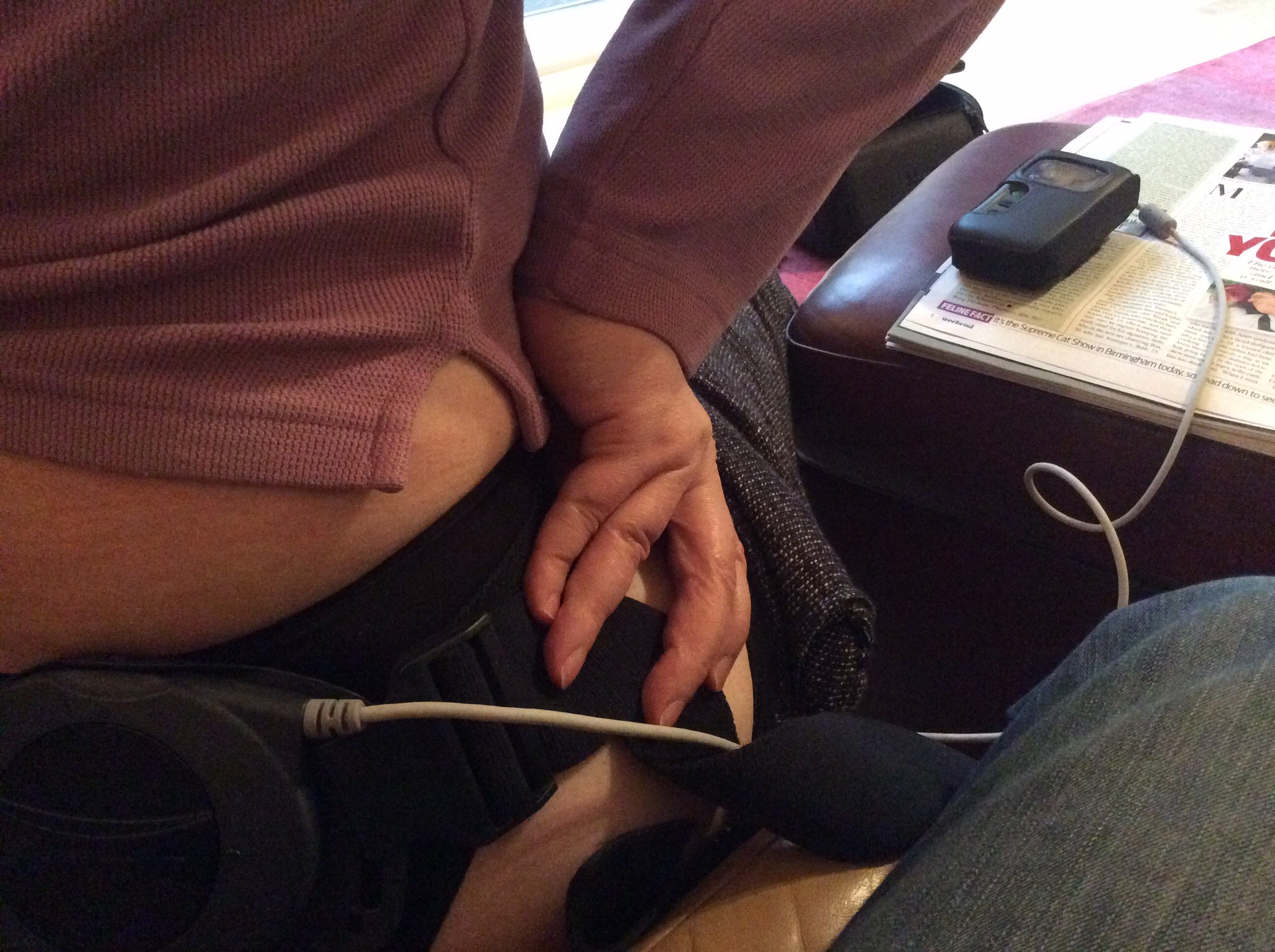
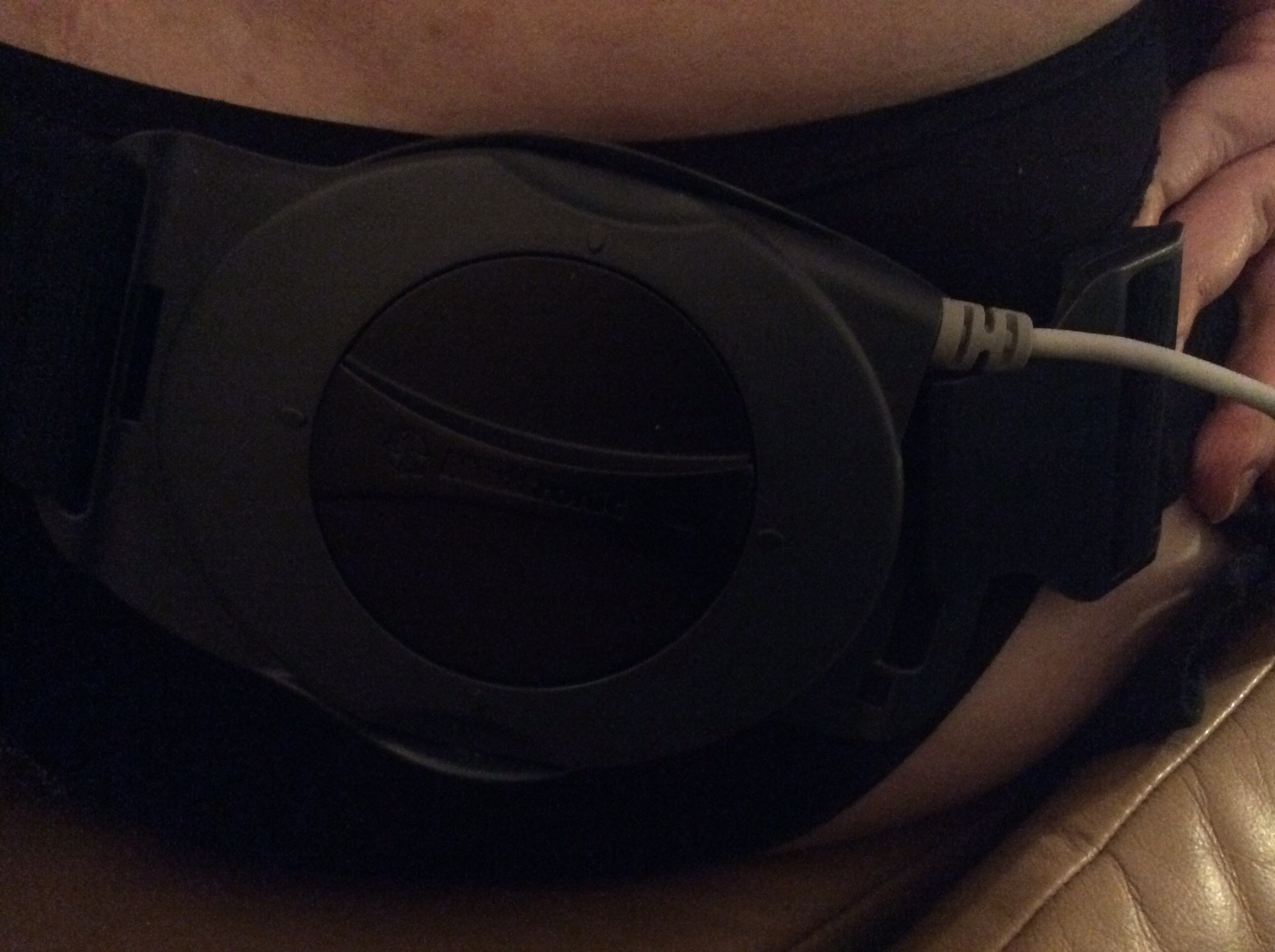
The last week has been a bit bumpy for me.  I can safely report that the stimulator doesn’t help certain pains of a female variety, but I already knew that these symptoms exacerbate my back pain and so I spent a couple of miserable days at the end of last week.  It was probably rather ambitious to imagine at the beginning of the week that I would be able to attend governance meetings on consecutive nights – but I did manage the first one.  I won’t lie – it was a struggle.  Sitting for several hours in an upright seat and trying to concentrate and participate was much harder than I had anticipated, but I consoled myself that I was only just over 3 weeks post op.  But I really wasn’t well enough to attend the training with my own governing body the following night – I’m really sorry that I probably picked the wrong session, fellow govs!

As I become more mobile again, I am having to learn how I need to use the stimulator to best help me.  The change in weather is always a problem for most chronic pain sufferers and is also a problem for those with added joint issues like myself.  I know that I have already posted that the level of stimulation has changed since the permanent implant,  and I am probably a bit paranoid about increasing the voltage level.  When you have taken a mixture of strong medication for years, and you have been trained in pain control in a previous life, it is very hard to lose the mentality that says your body becomes tolerant  and therefore requires more and more for the same level of relief.  Of course in the case of opiates this is true to an extent, but please don’t be mistaken for this being the same as addiction – as hospice nurses we struggled every day with the false belief that it is better for someone in pain to resist drugs as they may cause addiction.  In the majority of cases all the time an individual has pain, the correct analgesic will be used by the body like a key in a lock to fit the pain receptors and thus inhibit them.  Finding the correct key for the lock is not always quite so easy…. Of course this does happen to a degree with the stimulation and thus with the low frequency stimulator that I have, the hospital instructs patients not to use it continuously in order to avoid creating a new “norm”.  Does this make sense?

I managed a dog walk at the weekend with Duncan and am happy to report that I was far more comfortable with the stimulation switched on.  My mobility and stamina remains hampered by the pain and stiffness at the fusion site, but it is great to be able to have some control over the leg pain.  I am still playing with levels in order to sufficiently cover my foot – I might just have to make do with a nice, new pair of boots!!  Saturday afternoon provided a perfect opportunity to sit down and recharge my battery in front of the first semi final of the rugby world cup.  Not sure I’ll ever get used to saying I need to charge myself up, and I must stop talking about being “turned on” or “off” as the former has produced some very quizzical looks……..

Time for a photo op – no, not related to that last comment!! – I had let the battery run down to 50% as instructed and the charger had already been powered by the mains.                                                        imageimage

The above pictures show the positioning of the paddle over my stimulator and the charger – the paddle is very reminiscent of the paddles on the defibrillator that used to be on resuscitation trolleys, although it doesn’t deliver such a hefty charge!

The charger is showing:

top row: my stimulator turned off, the volume, my battery at the half full mark

middle row: the imagepaddle making contact with my stimulator,

bottom row: the level of connectivity between the paddle and my stimulator, in this case it is poor with only 2 boxes filled out of 8.

The charger is now showing full connectivity between the paddle and the battery as all 8 boxes are filled in.image  Whilst in theory it is possible to be ambulant whilst the charger is strapped to your back, in practice I would say that the level of connectivity is quite positional and thus use the couple of hours it takes to watch a film, read or watch the rugby!!  It was a great match.

A gaggle of girls has just arrived home after a day out in Brighton, so time to put the pizza in the oven and prepare for a very giggly sleep over.

One day at a time

The big day has finally arrived!  I mentioned weeks ago that a birthday present for 2 teenage girls was a shopping trip to the Westfield, Shepherds Bush and tomorrow is D day.  They are excited….not so sure about Duncan.  The words cold feet spring to mind.  I will make a decision whether I can manage to go with them in the morning – at least there is plenty of disabled car parking and lots of coffee shops.  I think that there may even be shopmobility and the option to borrow a wheelchair if it all becomes too much – and that is just for Duncan!  So the girls have their vouchers and their birthday money, and instructions about what is considered a suitable purchase that mother will allow them to wear.  Oh, to be a teenage girl again…or not.

Meanwhile another one of my group is currently undergoing a scs trial, whilst another has had hers cancelled as she needs another operation.  She is absolutely gutted after struggling with chronic pain for years.  Yes, she has another condition that is causing her pain and obviously requires treatment, but she has a back story that is very similar to mine and so many others – an initial back problem from a bulging disc, several failed  surgeries and the resulting pain which nothing helps.  Drugs, side effects, sleepless nights, the desperation that sets in to find something, anything and it becomes a vicious circle.  By the time we arrived at the inpatient programme, we two had definitely been round this block several times and taken our respective families with us.  But we gelled immediately and understood each other, so this is why I can understand how desperate my friend is now feeling because I’ve been there.

Personally, I’ve felt rough for the last couple of days and I think that I probably have tried to carry on and overdone things.  The overwhelming need to be able to tell everyone that you are feeling great and that yes, it has absolutely all been worth it, is enormous.  On Friday I decided that I needed to show my face at a coffee morning hosted by the head at my daughter’s school.  A downside was that it was from 8.30 am – a dreadful time of day for me.  But I made it and my friend and I duly poured coffee and snacked on mini danish, before the first friendly face popped over to say hello.  This was followed by a couple of other parents, and then I spotted a friend talking to the headmistress, who has been very supportive of the whole family over the last year.  She immediately wanted to know how I am doing, as did my friend whom I haven’t seen since the beginning of term.  I could feel myself becoming clammy and faint, and the ability to speak with any clarity disappeared rapidly as my senses seemed to fail me.

On returning home – still only 9.30am – I had 2 more visitors during the course of the morning.  Whilst it was lovely to see everyone, I just felt like I was on a loop as I tried to describe the effect that the stimulator is having, no it isn’t a cure, hopefully it will help me to be able to function better etc., etc.  Someone else has commented today that I seem to be disappointed in my stim results and I am sorry that I may have given this impression.  It certainly hasn’t given me a magic wand to waft away all the pain, and the relief I experienced during the trial was different to that which I’m feeling now.  I’ve already mentioned that I require a higher level of stimulation voltage on the lithium battery, and that I can understand that I am adjusting to and thus becoming used to the sensations.  I am a bit worried that I will continue to need higher and higher levels of stimulation and will thus “run out” of options as I reach the top dose!  But rationally I know that this is a very long way off and that the changes are due to being more mobile and the stim is not yet scarred in place securely yet.  One reason that we are not allowed to sleep with the stim turned on, is that it is important for the body to have periods of non stimulation, so that it can really appreciate it when it is switched on.  The parasthesia should not become a new base line.

So it is tough explaining the results over and over, when the expectation is so high.  Our expectations on ourselves are the highest though, and we all desperately want this treatment to be the answer to our prayers, so if I can have more better days and nights than not, then I have won the lottery.

Half a life continued

The journey to UCL was long and became uncomfortable, but the stimulation definitely toned down my usual nerve pain.  I was lucky really that I had been allowed to go, as I am officially the most embarrassing mother and there was great concern in the back of the car that I wouldimages (4)
say something awful to the flatmates!  My idea of awful and his do vary greatly.  I was allowed in th
e flat but Duncan was informed that he wasn’t allowed to leave me – charming!  The flatmates, 2 girls and one boy, were all perfectly charming and chatted – I do think the problem is in our stude
nt’s mind……although maybe they were all grimacing after we left!! ha, ha, ha.

The disappointing thing that I found yesterday was that the stimulation didn’t prevent me from losing my left leg as I got out of the car.  I am sure that fellow nerve damage sufferers know what I mean when I describe a leg and foot that loses all feeling and just gives way, particularly after a period of sitting.  The strangest thing was that whilst I couldn’t feel my foot at all, I was completely aware of the stimulation – parasthesia to use the medical term – within it! Oxymoron or what!

Whilst the realisation that the neurostimulator can only do so much may be tough, it was the right decision to make that journey.  There have been so many times over the years that I have been asked why I am pushing myself to do something that seems at odds with a chronic illness, and this is where the double meaning of the “Half a Life” title emerges.  When you are in the midst of a chronic illness, in my case constant nerve pain, it is all too easy to give up on life.  Those of us at St Thomas’s pain programme earlier this year have lost so much already – lost careers in the room included anaesthetist, horticulturist, barrister, nurse, sculptor – and we are the tip of the iceberg, our careers are just the tip of what we have lost.  It can feel like so much of your life has been swept aside in a flurry of failed surgeries, drugs and their side effects, hospital appointments, benefits application forms and appointments and judgements and then appeals, until the day arrives when you don’t recognise the person looking back from the mirror any more.  The pain becomes so overwhelming that it is easier to stay at home in pyjamas than to meet a friend for coffee, or attend a meeting, or go for a walk, or do any of the things that made life more than Half a Life.

Whilst I was on the programme, I met more people who had tried to take their own life in the last 12 months than I ever have.  We were one of 2 programmes running concurrently: ours for people for whom all other options had failed but who had a condition which might respond to scs, the other a 4 week course for those not quite at the same point or with a pain condition affecting multiple areas of the body.  One lady, with fibromyalgia affecting her head, was told by her own sister, a nurse, that “pain is pain – it is all the same, so get over it”.  Believe me, it is not!  This poor woman has tried to commit suicide twice and was struggling to come to terms with the news that there is no cure for chronic pain.  (www.fmauk.org)

One focus of the inpatient programme was the baggage we are carrying that is preventing us from living the life we wa‎nt to.  Some of it is impossible to lose, but there are ways to make it more tolerable – haven’t worked out how I do this with teenagers yet! Some baggage is unhelpful, unwanted or downright destructive and needs to be dumped – but may be difficult to let go.  Our state of mind is bound tightly with our physical pain; emotions, expectations, relationships all playing a role.  When I was 18 I met a new friend, and he introduced me to his mother.  She had been left disabled following a failed epidural years earlier, but had never managed to move her life forward.  Now I have empathy and comprehension of her situation, but my overriding memory is still of a sad lady who was always in her dressing gown with a glass of sherry in her hand no matter the time of day.images (3)  I made Duncan swear that he would never let me become like this – no funny comments here!!

So I continued to organise the school fete, became a governor at one school and a Friends committee member at another, taught myself to make and ice celebration cakes, held coffee mornings and dinner parties. At times it is too much on no sleep.  It would be easiest to say “no”, not to take that car journey to drop my son off, but then I wouldn’t be living even the Half life that this illness has left me with.  (to follow – page re:Living with Chronic Pain – pain buddies please email me any info you would like included, claire@saul.im)