Meet ‘n’ Greet time over on Dream Big! Join us….


Meet ‘n’ Greet time over on Dream Big! Join us….

I recently came across this young lady Selina Towers and was initially drawn to her story as she lives with the same genetic condition that I have. When I read a little more I couldn’t help but be struck by her zest for life and her desire to raise awareness of the beauty of all body types…..
Only this morning BBC Breakfast covered the story of former Vogue editor Alexandra Shulman who has this week posted a selfie wearing a bikini. No great shocks there, except that the picture is unfiltered and Ms Shulman aged 59 looks like any middle aged lady on her hols – or rather she does not resemble an airbrushed model. Do these “perfect” images often published on social media influence the body image of those viewing them? Last week actress Kate Beckinsale spoke about giving positive advice to her daughter on body image and the importance of not trying to live up to an impossible stereotype. In Australia a new campaign targeting parents of pre school age girls, aims to celebrate body shape and size diversity, celebrate skills and personality traits, as well as teaching parents healthy language around food and bodies.
In this article Selina looks at disability within the modelling and fashion world, and how disabled models could challenge stereotypes, if given a chance.

A year ago, I wouldn’t really have thought about it, I would have just thought it was an absolutely brilliant thing bringing to light the beautiful disabled models that we rarely see on the runway but then, I didn’t truly understand how it felt from a disabled person’s point of view.
I was born with a condition called Ehlers-Danlos Syndrome which didn’t start to really affect me until I was around 10 years old, but even then it was only the odd dislocation here and there. Although it did affect my every day life and limited what I could do, I didn’t really consider myself as having a disability, just some fairly cool party tricks where I could bend bits of me that really shouldn’t bend that far! However last year, I had an unfortunate bout of flare ups with unfortunately led to me having to become reliant on a wheelchair.
For the full article go to Models of Diversity

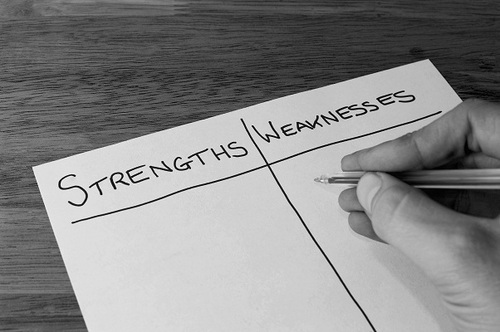
Overcoming low self esteem is so relevant in this age of perfect social media posts, selfies and constant access to each others’ social profiles. It is also very relevant when living with illness or disability or any major life change that robs you of self esteem……have a read of this post on QuipNip blog.
How to overcome low self-esteem
The way we see ourselves, judge ourselves determines our self-esteem. People with good self-esteem are happier compared to people with a poor self-esteem. What exactly sets these two types of people apart? Is it their successful lives or achievements that give them a positive self-image? But then aren’t these things by-products of a healthy self-esteem?
You might think, “I could have a successful career, too, had I little confidence in myself” or “I could grab that opportunity too had I seen myself worthy enough” but you think that you “suck”. The truth is everybody sucks, but they are still doing fine!
“Why?”, you would ask. The answer is, they accept themselves as who they are, embracing their strengths and accepting their weaknesses- that’s where the difference lies.
Having a good self-esteem is not an easy task, but it’s not impossible, either. The first step to…
View original post 691 more words

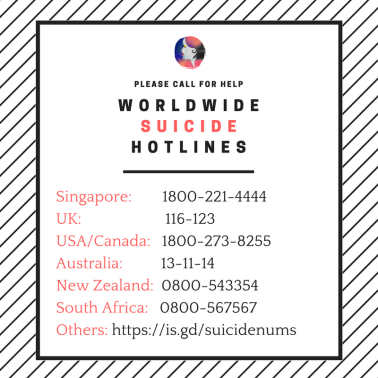
This is an emotive post shared by Sheryl from A Chronic Voice blog. She gives us a Trigger Warning that this post is about chronic illness and thoughts on suicide – it may be potentially triggering. For help contact:
The Fears of Aging with Sickness
While I did not ask others with chronic illness how they feel about this, I know that many of us share the same sentiments. It feels like suicide is always an option on the table. And putting suicide aside, the number one cause of death in the world is due to chronic illness as well.

We are living out that rainy day scenario others are saving up for. Modern medicine combined with pieces of complementary therapies is like an umbrella. But one that is never big enough to shield us completely from the downpour. My lovely caregivers are also getting older by the day, and everyone grows naturally weaker with age.
To read the full post visit A Chronic Voice

Here we are a week into August – and it turns out that what my grandma used to say is true – time really does move faster the older you get! Where has the year gone? In fact where have all the years gone?
I have just taken up the Chair of the alumni committee for my old school – whilst I’ve been on the committee for a few years the shoes I’m filling feel enormous as they were previously worn by my old chemistry teacher – one of my first official roles will be at the 30 year reunion for my own year group in September. A couple of us are currently tracking down classmates – stalking people on Facebook, Linked In etc according to my kids – and it has unleashed so many memories.
Can it really be 30 years since we left school? Some of this group know that I am now disabled, but it is going to be a really big deal attending this event in my wheelchair and answering the questions! I think when I give a little speech at the beginning standing up, I might say that the wheels are to accommodate my high heels!
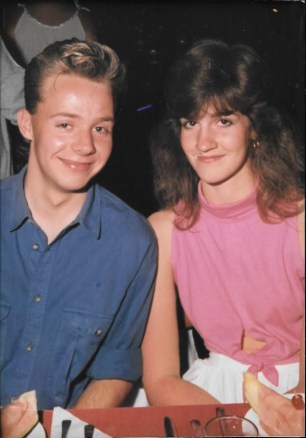
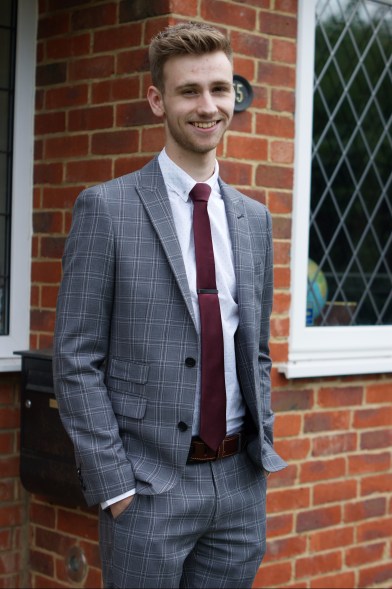
The funny thing is that despite all the physical changes in my body, the family I now have, the career I loved and lost, the exhaustion of life with chronic illness, inside I can still feel that 18 year old. My own 18 year old just looks at me, shakes his head and tells me I am old – ha, ha, ha, none of us believe it will ever happen do we?
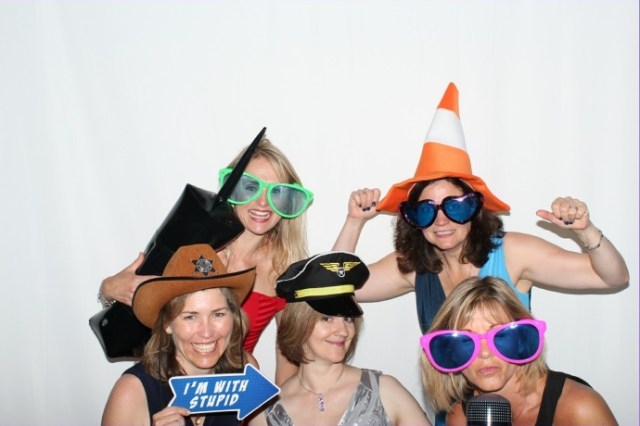
So what better way to get over the feeling of being past it, than to find some inspiring blog posts to inject some zest today! Kick off your shoes, grab a cuppa and settle down for some fantastic reads – I hope you enjoy this week’s gems as much as I have!
https://movementdisordersblog.wordpress.com/2017/07/31/skimming-through/
https://brainlessblogger.net/2017/07/28/managing-work-with-chronic-pain/
https://wheelescapades.wordpress.com/2017/04/05/naidex-the-nec-birmingham/
https://kellyontherun.com/2017/07/11/perception-icebergs/
http://www.goldengraine.com/2017/07/26/disabled-full-time-job/
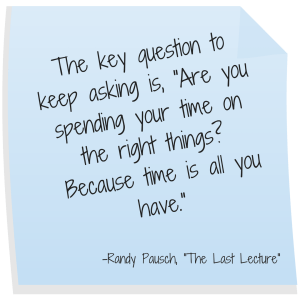
http://www.chronicallypositivemom.com/the-last-lecture-inspiration-for-everyone/
http://www.themerrymomma.com/2017/08/3-ways-building-closer-family/
https://thoughtsinamoment.com/2017/08/03/biofeedback-therapy-with-mindful-nutrition-wellness/
Remember to comment, like, share and make a blogger happy!
Claire x

Earlier this week I posted my review for new novel Leave the Night On and now to celebrate and conclude her blog tour, here is a fantastic Q&A with author Laura Trentham.


Plots are strange things for me…I can rarely pinpoint anything in particular that triggers an idea. They usually pop into my head when I doing something else entirely like making dinner of driving the kids around.
I love the scene where Sutton gets drunk and finally propositions Wyatt for real. I hope it’s funny and sexy and the reader can feel her mortification when she thinks he turns her down.
Wyatt. He’s sexy and tough, but also incredibly sweet. He loves his family and would do anything for them. My heroes are complex and most definitely not a-holes.
Two more Cottonbloom books! WHEN THE STARS COME OUT (1/30/2018) features Wyatt’s twin brother Jackson. SET THE NIGHT ON FIRE (8/2018) is Mack Abbott’s book. Also, sometime in the fall of 2018, I’ll have a military themed romance/women’s fiction book releasing! I’m super excited about it too.
Actually, my first books were historical romances, and I’ll be re-releasing two and adding a new book in my historical Spies and Lovers series this fall (Sept/Nov 2017). But, while the historical books were on submission with publishers, my agent suggested I try a contemporary. It sold to St. Martin’s Press only a couple of months after my historicals sold. I’ve set all my contemporaries in the American south because that’s where I was born and have lived most of my life. I understand the way southerners talk and think.
I’m going to have to throw it back to Mary Stewart as my favorite author. I quite often reread her books. But as far as which book I’ve reread the most, it would have to be Julie Garwood’s The Bride.
I’ve always been an avid reader, but I didn’t even consider writing until five years ago. My daughter started preschool, and going back to work doing what I went to school for (chemical engineering) wasn’t feasible. I sat down one morning and started writing. At first, I didn’t even tell my husband what I was doing. I won’t lie, it took a lot of work and rewrites to get those first manuscripts good enough. But, eventually, I signed with an agent and sold them both.
Reading! (I know that’s a shocker:) I also enjoy the mindlessness of games on my phone.
Fried rice! I just learned to make it at home. My rice cooker is my second favorite appliance (behind my coffee maker!)
Andrew is a secondary character in the first Cottonbloom trilogy about the Fournette siblings. He’s kind of a slime ball in those books too.
He likes to wear women’s underwear. Just kidding!! Actually, I’m drawing a blank, he’s an open, honest kind of man.
It’s actually set half in Mississippi and half in Louisiana. I wanted a southern location. But, I also envisioned a twist on the wrong side of the tracks story. In Cottonbloom, the more affluent live on the Mississippi side and the blue-collar working class live on the Louisiana side. I wanted that push-pull and rivalry between the two. It informs the relationships between my couples.
Thanks Laura for a great new read! I will be looking out for some of the other Cottonbloom books….quite fancy finding out what happens to those other Abbott boys!


Welcome back, pain pals, for another week and that means another Monday of inspiring blog posts that I have found for you.
I’m not going to write about the ups and downs of life in the Pain Pals house here this week – I still need to write a proper post about genetics, my lovely girl and i can now include our new family handbook….more of this later, I promise!
The dislocations have been fast, furious and very regular over the last week and severe gut pains after every meal have both left me fatigued and sofa bound……but the good news is that I have spent time finding and reading some great new blogs. I have picked some posts here and they range from chronic illness depicted as sweets, to body image, to a review, to some delicious looking frozen treats – perfect for the summer holidays (if only the sun would come back!!). If you are a mum of a daughter, or indeed an adolescent daughter, you must read Dear Little Girl With the Smart Mouth – it made me laugh and cry….and read it to my teen girl!

So….grab a cuppa, sit down and unwind with these great, inspiring blog posts. Please, please make someone’s day with a like, a follow, a share or even better a comment!
http://www.healinghugsandhope.com/2017/07/my-chronic-illnesses-as-candy-bars.html
https://www.itsnottoocomplicated.com/home/2017/7/10/a-day-out-with-a-disabled-toddler
http://www.blessingmanifesting.com/2017/07/stop-verbally-abusing-your-body.html/
http://www.sublimemercies.com/2017/07/ableism-beaten-down-and-fighting-back.html
https://readbetweenthelyme.com/2017/07/22/celebrating-3-years-here-at-read-between-the-lyme
https://www.jthreenme.com/dear-little-girl-smart-mouth/
https://brokendownbody.wordpress.com/2017/06/30/but-one-of-my-best-friends-is-black/
http://www.smilesandsundays.com/imak-compression-gloves-review/
http://achysmile.com/index.php/2017/06/12/abdominal-migraine/
http://myfruitfulhome.com/2017/06/29/16-yummy-healthy-frozen-treats/

Claire x

continuing from yesterday’s republished post, this is the follow up written at the time with a few additions and adjustments for today…..
So where does this leave me? I am the person sitting in that seat desperately in need of help. This “me” refers to all of us experiencing chronic pain whatever the reason – pain that has lasted for longer than 12 weeks – 6 months depending upon who you read!
From that first visit to our general practitioner to the physio to the surgeon, it can feel like everyone is giving conflicting advice. I don’t blame the GPs for starting so many of us on opiates. When the gabapentin or lyrica isn’t sufficient, and the amitryptilline doesn’t touch the sides, there isn’t much else left to turn to when this desperate individual is begging for help.  In the same way, how many of us have surgery out of desperation? I am sure that the neurosurgeon who performed my first fusion really didn’t know what else to do with this weeping woman on his consulting room floor, declaring she couldn’t take any more! I don’t think that anyone takes these drugs lightly as the side effects can be so debilitating and vary from person to person. The consultant from my last job prescribed my first cocktail and I never dreamt that I would be taking them for so long or quite how they would affect me.
We’re prescribed tramadol, sevredol, oromorph, MST, oxynorm/contin, and at first there is usually some relief. For me the drugs never completely masked the pain and the dose of pregabalin was soon topping the scale and the oxynorm started creeping upwards soon to be replaced with the long acting variety. I smile now when I think how at work the “control” drugs are kept in double locked cupboards and yet my bottle of oxynorm was stuck on the kitchen window sill to take a quick swig when the pain became too much. My GP never tried to limit amounts and gradually increased the dose over the years. I had also been prescribed mirtazepine to take at night – another antidepressant drug prescribed by my old consultant. The side effects were horrendous. I tossed and turned all night yet was unable to function the next morning to the extent that I knew the kids were in the room, but I couldn’t open my eyes. Eventually I weaned myself off. But at my very first appointment at St Thomas’ Dr P took one look at my meds and informed me that the opiates would have to be reduced. Yes, he did explain why with the reasons from part 1, but I think that everything that came after was a blank. There is a feeling of panic – how on earth will I cope with less than I am taking? This isn’t even working! A fear deep in the pit of your stomach as the realisation that you may be forced to try to tolerate higher levels of pain hits home.
St Thomas’ hospital, London, policy for patients on the spinal cord stimulator programme is that you should not be taking any liquid or injectables; breakthrough doses should be weaned right down before the trial; and high doses of long acting opiates should be weaned down (MST & oxycontin). I don’t know why different hospitals have different policies. In my experience over the years consultant preference has always played a huge role in this type of policy. I have no idea how other countries deal with this issue, but I do know that the USA carry out a huge number of nerve transmitter inplants each year. We all have different pain and maybe a one policy fits all is not the right way to go. Within our group a lady barrister had a chronic bladder problem (interstitial cystitis – for further information have a look at this great blog: Bladder Help) which left her with constant raw areas on the bladder wall. Her pain had very specific flares resulting in a trip to A&E approx monthly and pethidine injections until the flare subsides. She was unable to imagine how she could possibly cope during these times of crises. For further information on bladder related problems visit Layla’s http://bladder-help.com/
Telling us that we must cut back is the easy part. Doing it is somewhat trickier. There will be several people on SCS facebook support groups at any one time who are currently struggling as the pain spirals up as the drugs go down. It is tough on nearest and dearest too. Every time that I have lost the plot in recent weeks, my daughter looks knowingly at the rest of the family and mouths “drugs” – even when she deserves to be yelled at! So is there a simple answer? I guess the obvious would be not to prescribe opiates in the first place, but until a suitable alternative becomes available, I don’t believe this will happen any time soon. So meanwhile, we dependents will have to ask you friends, carers and medics to bare with us as we attempt to wean down our dosage, to offer love, support and most importantly, please don’t judge when the going gets tough, as it certainly will.
Update 2017: I was still taking oxycontin when I had my scs trial and the permanent implant, although I had managed to reduce the dose. Over the following months, with huge support from my GP, I continued the process of weaning down my dosage – afterall one of the reasons for having the implant was to be free of drugs. Bloody mindedness stepped in and I came down the doses considerably quicker than my GP wanted me to, but be under no illusion, it was not easy. Upset stomach and cramps (for someone with EDS gut issues normally), sweating (additional to POTS symptoms), concentrations issues, insomnia (worse than previously) and more. I met up with several friends I mad on the pain course last summer, and whilst we had all had different experiences with the scs, we were all agreed that we felt better since ceasing opiates. We still have chronic pain. But we have found that we have better nights (remember I can’t have my scs switched on at night so have no relief for my nerve pain) – not necessarily sleeping more, but better quality sleep – and the feeling of being oneself again.
For me a noticeable difference has been an increase in the pain associated with my Ehlers Danlos syndrome in my joints and soft tissues since stopping the oxycontin. I believe that the opiate was masking my deteriorating condition and I am now having to learn to manage this without resorting to strong opiates again. On bad days it would be very easy to open those bottles of oxynorm again!  Funnily enough I actually find that weak opiate based drugs, such as codeine phosphate/paracetamol mixes, give me more side effects causing me to reach for alternatives first (heat, gentle movements, gels etc etc). On the bad days……! The spinal cord stimulator has definitely given me control over the chronic pain in my back and leg caused by nerve root damage – I can go as far as to say that I would be unable to manage life without it. But I am not drug free – I remain on the highest dose of pregablin/lyrica – and it currently is unable to provide any relief for my other chronic pain.
I plan to cover some of the more recent innovations in neuromodulation and also pregabalin?Lyrica – please send me your thoughts or suggestions!

I wrote this last year but it is still so relevant and I hope helpful! Part 2 tomorrow…
Pain, pain go away…..if only it were so easy. A new facebook friend is suffering terribly at the moment, whilst trying to do what the hospital requires for a spinal cord stimulator trial. Trying to offer some words of advice and encouragement has got me thinking and I thought I’d have a stab at talking about opiate use in chronic pain.
I don’t know what the policies of other pain centres are, but the consultants at St Thomas’ recognise that opiate substances – control drugs such as morphine, pethidine, tramadol, oxycodone etc – are not necessarily the right fit for every type of pain. The majority of what I am going to write is from personal experience – both in my other life as a palliative care nurse, and from now living with chronic pain. I’ll try not to become too medical and I may spread this over several posts as I really don’t want to bore you! I have done a little medical reading to ensure that I am giving you the latest thinking and for those with medical minds I will list some of the articles that I’ve read – although I wouldn’t necessarily recommend them, bedtime reading they ain’t!!
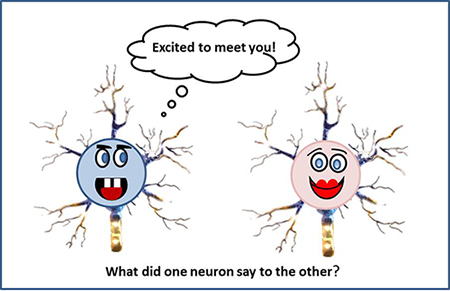
In cancer care and particularly palliative care, opiates have long been the gold standard for pain relief. Diamorphine, pure “medical” heroin, was the drug of choice when I started working in cancer care, but even then nerve or neuropathic pain was a nightmare for us to control. Try to visualise your nervous system as a circuit board whose main branch is the spinal cord, which is supplied with its impulses to & from a source that is your brain. The channels of the circuit are made up of building blocks, cells called neurons, which transmit the messages to & from the brain. The unknown quantity is: in the circuit that processes and transmits pain, which neurons are those providing the output that drives the pain network within the brain where chronic pain is present. Still with me? In chronic pain the firing activity of the neurons is changed, but it is still unknown quite how it is altered.

I have sat in some very complicated pain management sessions in my time when the descriptions of the different pain receptors almost went over my head. All you need to know is that the building blocks contain different receptors which convey different sensations and so respond to different drugs. Think of a lock and a key – a particular key (the drug) is needed to open a lock (the pain receptor). When opiate drugs are used for pain control, the receptor that responds to morphine etc is Mu, but there is now known to be an optimum time period for use of these drugs – probably about 3 months. After a while the opiates cause the down regulation of the Mu receptors, which means that fewer receptors need more opiate molecules to get the same feeling of relief. Eventually the loss of these receptors means that our bodies cannot regulate the feeling of pain so well – and produces what the medics call “hyperalgesia”. When your consultant tells you that the opiates may be increasing your pain rather than reducing it, this is what he is talking about!
But where does this leave me, the person with the chronic pain? To be continued….
“Personalised Medicine & Opioid Analgesic Prescribing for Chronic Pain: Opportunities and challenges” Stephen Bruehl et al, The Journal of Pain, Feb 2013, Vol 14
“Increased Pain Sensitivityin Chronic Pain Subjects on Opioid therapy….” Yi Zhang et al, American Academy of Pain Medicine, 2015, Oxford University Press
“Narcotic Drugs for treatment of Chronic Pain: a double edged sword” Peter Ullrich, Spine-health.com, 2012
“How Pain killers sometimes increase Chronic Pain” Stepahnie Burke, Spine-health.com, 2013
Think this is enough……I apologise if this is too medical, the next part won’t be!

Another week, another Monday – so that means one thing here at PainPals! Thank you so much for the feedback for this feature – I love to hear if you are enjoying it, but please do send other comments and suggestions for anything you would like to see!
There have been two major events in our house over the last week. The first was a long awaited appointment with a geneticist for the beautiful girl(BG). I can’t remember if I have mentioned before that we were struggling to find a consultant of any specialism who would accept the kids – just for a consultation. Unfortunately University College Hospital London Hypermobility/EDS unit no longer take referrals straight from a GP but instead it needs to be from another hospital – this has changed since my own diagnosis. My GP tried 2 rheumatologists – one recommended by UCLH – and both turned the requests down as the A level student (soon to be known as the politics student – we hope!!) and the BG were then under 18. So..we tried a local paediatrician and by the time the referral was churned out through the system, said A level student had turned 18! Then the children’s department decided that they really weren’t the right people to see the BG. Finally a fantastic lady in the hospital bookings found a genetics consultant from a London hospital who runs a satellite clinic monthly in our local hospital – and even better she specialises in children! Hurray.
Meanwhile the BG has become convinced that she is just making a fuss and doesn’t really need to have a confirmation of symptoms – her biggest concern was that using the Beighton scale she doesn’t have a high hypermobility rating. Hmmm…..mother here keeps explaining, as her shoulder clunks out of joint for the umpteenth time and she can hardly walk due to hip and knee pain, that there are so many other elements to consider here, particularly a very strong generational family history. The consultant was a lovely lady who listened to me, my history, the family history, the issues my boys have had and then to the BG herself. No she isn’t the most hypermobile person she has ever seen, but can she can already see that the BG has hips that are out of alignment and the dislocations are causing the same with her shoulders, so this immediately puts her back at risk of scoliosis and future problems. Ringing bells in my ears!!! More of this in another post…..
The second major event was our old dog Sam having a massive haircut with our fantastic groomer. Now I don’t wish to play down the wonderful care given to my girl, but Sam is about 15 (rescue dog so not entirely sure) and like his human mum, has a very dodgy lower back, hips and rear legs. He has YuMove pills daily and struggles to walk now, so getting into the doggy bath and being strapped in the harness before the Jacuzzi begins is no mean feat for an old boy! He came home a couple of hours later smelling wonderful, looking fab as always but absolutely shattered – doggie spoonie here.

Back to all of you and I have found yet more great inspiring blog posts by writers who I haven’t featured before. Whilst the majority have some sort of chronic illness background, the posts aren’t necessarily about health! Did you know that National Cheesecake Day approaches? Find out about it at This Auto Immune Life and about the design and sewing of beautiful clothes from a fellow zebra at Sew Pretty in Pink – I don’t even own a sewing machine!! I may be a bit late to the party, but have found the wonderful Youtube channel from the SleepySantosha website – Spoonie yoga…great! If you only have time to check out one piece of writing the poem by Bethany Kays is inspiring and heartbreaking in her quest to survive abuse. In fact I struggled to pick just 10 posts this week, so I am featuring 15 with a couple from some of my pals at the Chronic Illness Bloggers who have been here before.
Grab a cuppa, sit back and enjoy some great posts – and hopefully make some new online friends! The first post is a shout out award for all us spoonie bloggers!
http://www.balancedespitethechaos.com/blog/an-award
https://jamisonwrites.com/2017/07/12/this-is-why-i-hate-summer/
https://sewprettyinpink.wordpress.com/
http://www.thisautoimmunelife.com/2017/07/23/national-cheesecake-day/
https://whenwomeninspire.com/2017/07/22/mental-health-tips-for-women/
https://bethanykays.com/2017/07/24/poetry-45/
https://beingcharis.com/2017/07/20/qa-with-charis-about-her-journey-with-ankylosing-spondylitis/
https://sleepysantosha.com/how-to-start-yoga/ plus Youtube channel: https://www.youtube.com/channel/UC0ROkm_8Bjk0qOQ13XYOebg/feed
https://carlyscrazychroniclife.wordpress.com/2017/07/11/alternative-therapies-or-not/
http://voiceathlete.co.uk/dystonia/
http://momssmallvictories.com/self-care-for-moms-with-chronic-pain/
https://edsjour.blogspot.co.uk/2017/07/10-tips-for-coping-while-in-waiting-room.html
http://www.bloomingmindfulness.co.uk/?p=440

Please make someone’s day with a follow, like and comment!
Claire x
I have shared this post with Honest Mum blog


Turning chronic illness into chronic creativity
Stories about fostering and adoption
Personal experience of living with chronic illness when life is beginning
Living with disability, using personal experience for social change
The greeting card community company
Life With Chronic Illness
Living life with migraine, post-concussion syndrome and mental health
My Experience with Ulcerative Colitis - the good, the bad and the messy
My neuroimmune journey: PANS, ME, and POTS
Genuinity: a philosophical quest to make the world a better place
Thoughts of a twenty-something freelancer navigating her way one blog post at a time
Ramblings from a writer
Author, Poet, Storyteller
Welcome to the adventure, from the fun to the mundane and all that's in-between


 PainPalsBlog