
When a person loses their “raison d’etre”, what do they become? Blood and bone and tissues.

I have just watched a young athlete win her heat in the European championships with an enormous Personal Best and the delight on her face, in her body language, in her voice were infectious and special. The training and the hard work that she has put her body and mind through over weeks, months and years is paying off today.
The thing that drives each and every one of us to get out of bed in the morning will be individual and change at different times of our lives. Dreams and aspirations aged 20 will alter, expectations change with life experience and maturity. But what happens when that reason for being feels like it is “stolen’ away by chronic health issues?

Personally I found that something that affected me greatly was medication. The combination of strong anti convulsant drugs combined with opiates used for nerve pain combined with a night time drug usually used in severe depressive disorders, at times created side effects that were as difficult to cope with as the chronic pain for which they had been prescribed. The combination of pain, sleep deprivation, brain fog and inability to concentrate just felt like a recurring cycle – a domino effect as one thing caused another caused another in ever decreasing circles. I didn’t know whether I was coming or going and the antidepressant drug, mirtazepine, left me unable to function in the mornings – my kids, the younger two at primary school then, would have to physically get me out of bed and then I would drift off into semiconsciousness sitting on the loo. I could hear them talking to me but I just couldn’t open my eyes.

Slowly but surely it felt as if the ordinary things in life were being stripped away, including my lifelong passion for reading. I have always had a book or two on the go, and no matter how late is is, I always have to read at least a couple of pages before turning the light out to sleep. Over a period of a couple of years I found my ability to read a book diminished – despite being awake until the early hours night in, night out, I was unable to complete a book as I read the same page over and over. What the heck was happening to my brain? A friend bought me a magazine subscription for my birthday and I couldn’t even manage to read a whole article. But my pain was so severe and uncontrolled that my inability to read was the least of my problems, as some days I couldn’t imagine living another week like this let alone another 40 year years.
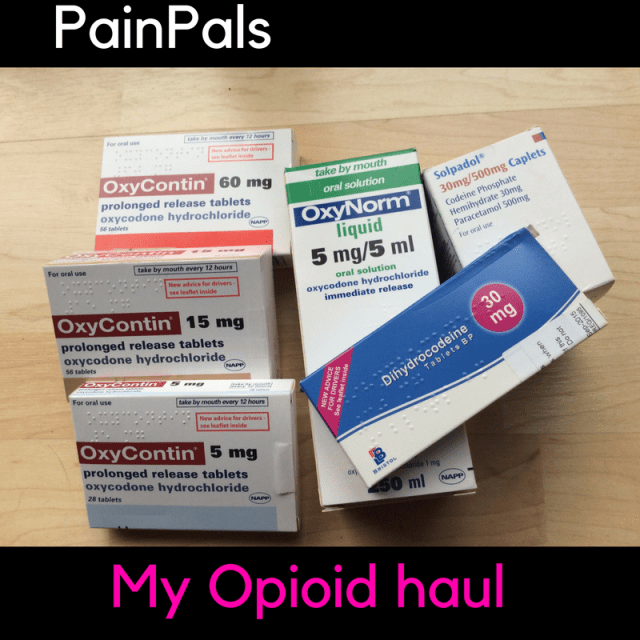
When joining the pain programme at St Thomas’s hospital (London), before I had my spinal cord stimulator trial, I had to agree to reduce my oxycontin (oxycodone – double strength synthetic morphine) with a view to coming off it entirely. I have written about the current opinions re use of opiates and chronic nerve pain before and about my “withdrawal” – that is not what I want to concentrate on here. My opiate dose reduced over a period of time and gradually my sleep improved along with my concentration. How is it possible that my sleep got better with no pain relief (I cannot have my scs turned on at night)? I had not realised just how huge an effect the drugs were having on my sleep and general well being – and not a good one!

Gradually my brain has allowed me to start reading again and to finish a book or an article. I found a local book club that meets monthly in the pub and we read any genre as long as it is a recent publication, so that no one has already read it – no issues to be had with discussing someone’s all time favourite! I love the fact that we don’t take our discussions too seriously and I have met some lovely new friends. My love of books led me to some social media book groups and it was here that I discovered the world of reviewing.
The fact that authors and publishers are generous enough to share their new pieces of work with an amateur reviewer like me feels amazing. I have discovered the joy of receiving an advanced copy (ARC) of a new piece of writing and being one of the first people to read it. Books have always been a part of my home and as a bit of a puritan, I would only ever read an actual book – I like the feel of a book in my hands, the smell of new paper and the beauty of a new cover and uncracked spine. But……becoming a book reviewer has converted me to a Kindle user. Don’t get me wrong – nothing competes with a brand new book or a well thumbed favourite classic – but I do appreciate having so many books available in one place and as my ability to hold a book has worsened, the ease and weight of a Kindle is perfect, particularly when lying down!

I know that authors are grateful to the band of book reviewers that are out here in the blogosphere, on goodreads and Amazon. We help to get their titles out in the public domain. For me though, I have so many reasons to feel grateful to these wonderful authors, publishers and social groups as becoming a reviewer has given me back a role and with it a sense of worth. The first time that I saw my name on a banner for a blog tour, I knew that I could still make a difference. I might not be able to hold down a job due to my chronic conditions and the unpredictability of my symptoms – but this is something I can do!
There still are days when I am unable to read, and others when I might have read the book but brain fog stops me from getting a review from my head onto paper. I have had times when I will know that a deadline is looming and the stress of being unable to write will increase my symptoms, thus starting a vicious circle. But I appreciate that I have been gifted someone’s work, something precious to them that they have poured their heart and soul into. I am entrusted to care for it and I will always do this. There may be times when I struggle to get a review written, literally when I have dislocations, but I will always read a book sent to me and give a fair, honest review. In school many years ago, I was taught how to write a book review and I have never quite been able to shake off my old teacher’s instructions – some of you will know that this means my book reviews can be a bit long. But if I have been given an author’s “baby” the very least that I can do is spend the time to give it due care in my review.

Reading and writing has given me a new purpose. It can never take the place of my lost life, but it can sit alongside it and over time reviewing has become an important motivator for me. I am reading a huge variety of genres, some that I would never have chosen myself and thoroughly enjoying expanding my horizons. I have discovered audio books and use these to help motivate me when doing physio and exercise plans – I can be often be found pacing my neighbours’ treadmill whilst listening to a thriller! It isn’t easy to do the necessary exercise to keep conditioned when everything hurts, but a good drama or mystery certainly helps to distract from pain and dodgy joints.
At times living with a chronic illness can roll one day into another into another, but amidst the fatigue, pain and failing body, I believe that it is important to have a reason to get out of bed and keep the brain “moving”. For me reading and reviewing has given me a new “raison d’etre” – something to keep my brain working, to feel some pride in and to appreciate my self worth.
Thankyou to The Book Club on Facebook & Tracy Fenton, Netgalley, Love Books Group & Kelly, Justine Sha at St Martin’s Press and the many authors and publishers who have entrusted me with their work.



 In the same way, how many of us have surgery out of desperation? I am sure that the neurosurgeon who performed my first fusion really didn’t know what else to do with this weeping woman on his consulting room floor, declaring she couldn’t take any more! I don’t think that anyone takes these drugs lightly as the side effects can be so debilitating and vary from person to person. The consultant from my last job prescribed my first cocktail and I never dreamt that I would be taking them for so long or quite how they would affect me.
 Funnily enough I actually find that weak opiate based drugs, such as codeine phosphate/paracetamol mixes, give me more side effects causing me to reach for alternatives first (heat, gentle movements, gels etc etc). On the bad days……! The spinal cord stimulator has definitely given me control over the chronic pain in my back and leg caused by nerve root damage – I can go as far as to say that I would be unable to manage life without it. But I am not drug free – I remain on the highest dose of pregablin/lyrica – and it currently is unable to provide any relief for my other chronic pain.

 A visit to the dentist got me thinking again about what our medication does to us. I am pleased to report that the dentist was very impressed when I opened my mouth – no not to speak , he made sure that didn’t happen – but to see a set of filling free gnashers! Quite a feat at my grand old age as my kids remind me. Forget the dodgy back, bendy limbs, loose joints, malfunctioning bladder and pain, because my teeth are still ok!
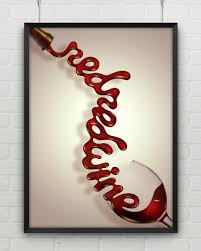 In the heady days of my early career as a London staff nurse, when we both worked hard and played hard, I was introduced to red wine. I’d never really liked it before, but our medic friends Steve and Tina introduced us to a certain wine bar in Leicester Square – and Steve introduced Duncan to a single malt whisky club, least said about that the better!! The Cork & Bottle was a basement bistro style wine bar and was the only place in the early ’90s where a particular Aussie red wine was to be found. More than once the four of us drank them dry of our favourite and had to be thrown out when we outstayed our welcome. I have no idea if it is still there, but it holds some great memories.
 But at times when it feels like there are few pleasures left, a tipple is called for – except for when it starts to taste DISGUSTING! My favourite red wine tasted foul – bitter and sediment like really cheap, student wine. What on earth was going on?? Did I ever remember to tell my patients that favourite food and drink might become unpalatable? In my head and neck days it went without saying, but I’m not sure that I really understood just how much my mouth, and my eyes for that matter, would change due to drugs. A drier, sore mouth with taste buds that could no longer taste – sweet food became a no, no and savoury food never had enough flavour.


 PainPalsBlog